About
By Joseph R. Wood
The new month brings a trifecta on my ecclesiastical calendar: a full moon, First Friday, and the feast of St. Joseph the Worker.
My calendar's tracking of astronomical events is a holdover from long ago, when the Church had its own astrology. It accepted the possibility of the influence of the heavens on earthly events as natural causes, much as the relative orientation of the earth to the sun causes seasons, and the sun and moon cause tides.
The Church has always rejected a deterministic astrology that denies both free will and providential influence in human affairs. Astrologers were often dangerous enemies of the Church. That never stopped frauds from claiming prophetic powers to read the stars and swindle the gullible. And more than a few folks still sneak a peek at their horoscope from time to time, something that in Church teaching belongs alongside Tarot cards and Ouija boards.
But people wise and foolish have always been transfixed by the power of a full moon. It may not make people lunatics, but its beauty is hard to ignore. It affects our hearts.
I'm glad my calendar signals the arrival of another full moon. We moderns need the reminder to look up sometimes.
First Friday devotion came from the revelation of the promises of the Sacred Heart of Jesus to St. Margaret Mary Alacoque in the late 17th century. By then, Copernicus, Galileo, and Kepler had provided a better understanding of the solar system's physical causes and effects.
That didn't stop people from consulting astrologers, but it may have made them more sheepish about admitting it. The Church had won the battle against deterministic astrology even as it began a long struggle against the claims for a godless, mechanistic, and exclusively material universe.
First Friday devotions have helped us retain the truth of a divinely-given telos to the order of the universe, which began in a good Creation by a good Creator and unfolds through providential guidance towards its end in that Creator Himself.
Compared with full moons, astrology, and First Friday promises, today's Feast of St. Joseph the Worker is a newcomer to my calendar.
Devotion to Joseph was slow to develop in the Church. Some sources claim the Eastern Christians got a head start on it in the Church's early centuries. Aquinas noted the necessity of Joseph's role. But writing in the fourteenth century, Dante does not mention him among the blessed in Paradiso. His March 19 feast was only added to the Universal calendar in the fifteenth century.
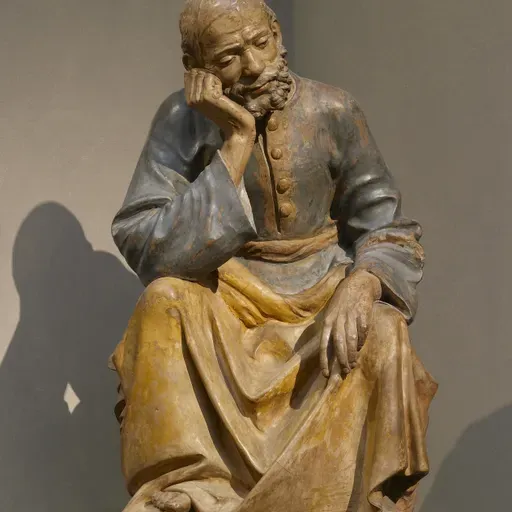
As Elizabeth Lev explains in this month's Magnificat, a "seismic shift in artistic depictions of St. Joseph" followed in the seventeenth century. From being portrayed "as a debilitated geriatric, essentially harmless to women," artists changed St. Joseph into a younger man, vigorous and plausible as a protector of Mary and Jesus, perhaps in the prime of a working life.
Devotion to Joseph grew rapidly. In 1870, Pope Pius IX declared him the Patron and Guardian of the Universal Church, a powerful title if ever there was one, and added a second feast.
In 1955, Pope Pius XII changed the second feast to May 1 and named it for St. Joseph as Worker. This is a rare, perhaps unique, example of a feast placed on the calendar in response to secular political tides. It was to coincide with International Workers' Day, offering a Catholic alternative to the celebrations of atheistic Marxist movements.
Today's feast is an optional memorial, but it punches above its weight for many Catholics who love this recognition of the holiness of a humble carpenter or house builder.
"The Worker" is one of many titles that St. Joseph carries. We hear of St. Joseph the Silent, who speaks nothing in the Gospels but acts readily on divine command. "Sleeping St. Joseph" is a recurrent theme for artists.
There's another possible title that suggests a vital aspect of Joseph's life, fitting with his work and his silence: St. Joseph the Contemplative.
The Desert Fathers kept the...
The new month brings a trifecta on my ecclesiastical calendar: a full moon, First Friday, and the feast of St. Joseph the Worker.
My calendar's tracking of astronomical events is a holdover from long ago, when the Church had its own astrology. It accepted the possibility of the influence of the heavens on earthly events as natural causes, much as the relative orientation of the earth to the sun causes seasons, and the sun and moon cause tides.
The Church has always rejected a deterministic astrology that denies both free will and providential influence in human affairs. Astrologers were often dangerous enemies of the Church. That never stopped frauds from claiming prophetic powers to read the stars and swindle the gullible. And more than a few folks still sneak a peek at their horoscope from time to time, something that in Church teaching belongs alongside Tarot cards and Ouija boards.
But people wise and foolish have always been transfixed by the power of a full moon. It may not make people lunatics, but its beauty is hard to ignore. It affects our hearts.
I'm glad my calendar signals the arrival of another full moon. We moderns need the reminder to look up sometimes.
First Friday devotion came from the revelation of the promises of the Sacred Heart of Jesus to St. Margaret Mary Alacoque in the late 17th century. By then, Copernicus, Galileo, and Kepler had provided a better understanding of the solar system's physical causes and effects.
That didn't stop people from consulting astrologers, but it may have made them more sheepish about admitting it. The Church had won the battle against deterministic astrology even as it began a long struggle against the claims for a godless, mechanistic, and exclusively material universe.
First Friday devotions have helped us retain the truth of a divinely-given telos to the order of the universe, which began in a good Creation by a good Creator and unfolds through providential guidance towards its end in that Creator Himself.
Compared with full moons, astrology, and First Friday promises, today's Feast of St. Joseph the Worker is a newcomer to my calendar.
Devotion to Joseph was slow to develop in the Church. Some sources claim the Eastern Christians got a head start on it in the Church's early centuries. Aquinas noted the necessity of Joseph's role. But writing in the fourteenth century, Dante does not mention him among the blessed in Paradiso. His March 19 feast was only added to the Universal calendar in the fifteenth century.
As Elizabeth Lev explains in this month's Magnificat, a "seismic shift in artistic depictions of St. Joseph" followed in the seventeenth century. From being portrayed "as a debilitated geriatric, essentially harmless to women," artists changed St. Joseph into a younger man, vigorous and plausible as a protector of Mary and Jesus, perhaps in the prime of a working life.
Devotion to Joseph grew rapidly. In 1870, Pope Pius IX declared him the Patron and Guardian of the Universal Church, a powerful title if ever there was one, and added a second feast.
In 1955, Pope Pius XII changed the second feast to May 1 and named it for St. Joseph as Worker. This is a rare, perhaps unique, example of a feast placed on the calendar in response to secular political tides. It was to coincide with International Workers' Day, offering a Catholic alternative to the celebrations of atheistic Marxist movements.
Today's feast is an optional memorial, but it punches above its weight for many Catholics who love this recognition of the holiness of a humble carpenter or house builder.
"The Worker" is one of many titles that St. Joseph carries. We hear of St. Joseph the Silent, who speaks nothing in the Gospels but acts readily on divine command. "Sleeping St. Joseph" is a recurrent theme for artists.
There's another possible title that suggests a vital aspect of Joseph's life, fitting with his work and his silence: St. Joseph the Contemplative.
The Desert Fathers kept the...