About
By Francis X. Maier
Yes, alas, it's another election year. You know what that means. The free-fire zone, formerly known as our public square, demands that we steal a break from our screens – and think. We think in order to understand. And we best understand the character of our times by tracing the lineage of the ideas and actors who have shaped them. Marx, Nietzsche, and many others are among the usual suspects. But I'd argue that the pedigree goes much farther back.
The late political activist Saul Alinsky named the founder of the modern revolutionary spirit on the epigraph page of his Rules for Radicals: "the first radical known to man who rebelled against the establishment and did it so effectively that he at least won his own kingdom – Lucifer."
Alinsky was an agnostic secular Jew. He had no belief in a personal devil. He had far more interest in the power structures of this life than in any imagined next. His reference to Satan was thus purely ironic and deliberately provocative.
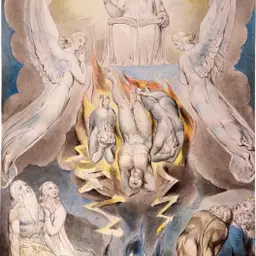
But his epigraph does capture a distinctly modern (if discreet) sympathy for Lucifer as a kind of Prometheus; a wronged hero fighting for his dignity, insisting on his own path, and courageously resisting tyrannical authority. It's a view that derives from 19th-century Romantic-era writers like Blake, Shelley, and Byron, who in turn drew on John Milton's great epic poem Paradise Lost, recasting Milton's Lucifer as less a villain and more a tragic figure.
Except they got Milton's Satan entirely wrong.
For those who haven't read Paradise Lost or have forgotten it since school, it's one of the great treasures of Western civilization. The story is simple. In Heaven, God exalts His begotten Son and places Him above the angels. Envy and wounded pride drive Lucifer and his followers to revolt. Defeated, they're cast into Hell. In his torment and futile rage against God, Satan attacks and corrupts God's innocent creation: Adam and Eve.
Milton's portrait of Satan is the exact opposite of admiration. Obsessed with his own swollen pride, refusing to accept the reality of his sin and dependence on his Creator, Satan methodically disintegrates from a spirit of immense grandeur and power to a scheming, loathsome snake. Locked in unending frustration and fury, he cannot build or create. He can only posture, seduce, hurt, and destroy. He becomes the father not only of lies, but of nihilism.
On the cultural front, Roger Scruton described the nihilism in our modern appetite for deconstruction – tearing down old truths, reinterpreting literature and history, upending political structures – in a chapter appropriately titled "The Devil's Work." (see here)
Fyodor Dostoyevsky captured the deceit and nihilism of revolutionary politics in Demons (also titled The Possessed or The Devils), his novel of radical agitation and violence in rural 19th-century Russia. For Dostoyevsky, the revolutionary temptation was a "fire in the minds of men." And that phrase, that fire, later became the title of James Billington's great study of the roots of revolutionary thought.
For Billington – the late Librarian of Congress, Harvard and Princeton scholar, and CEO of four federal cultural institutions – the modern revolutionary impulse is a kind of elite virus, the "spiritual thirst of those who think rather than [a] material hunger of those who work." Modern revolutionaries "are believers, no less committed and intense than were the Christians or Muslims of an earlier era."
Revolutionary thought becomes "an object of faith and a source of vocation, a channel of sublimated emotion and sublime ambition. If traditional religion is to be described as 'the opium of the people,' the new revolutionary faith might well be called the amphetamine of the intellectuals." His chapter on "The Occult Origins of [Early Revolutionary] Organization" has special interest for a Christian reader.
So what's the point here? Just this: If we don't see the fire in our own back yard, we haven't been paying a...
Yes, alas, it's another election year. You know what that means. The free-fire zone, formerly known as our public square, demands that we steal a break from our screens – and think. We think in order to understand. And we best understand the character of our times by tracing the lineage of the ideas and actors who have shaped them. Marx, Nietzsche, and many others are among the usual suspects. But I'd argue that the pedigree goes much farther back.
The late political activist Saul Alinsky named the founder of the modern revolutionary spirit on the epigraph page of his Rules for Radicals: "the first radical known to man who rebelled against the establishment and did it so effectively that he at least won his own kingdom – Lucifer."
Alinsky was an agnostic secular Jew. He had no belief in a personal devil. He had far more interest in the power structures of this life than in any imagined next. His reference to Satan was thus purely ironic and deliberately provocative.
But his epigraph does capture a distinctly modern (if discreet) sympathy for Lucifer as a kind of Prometheus; a wronged hero fighting for his dignity, insisting on his own path, and courageously resisting tyrannical authority. It's a view that derives from 19th-century Romantic-era writers like Blake, Shelley, and Byron, who in turn drew on John Milton's great epic poem Paradise Lost, recasting Milton's Lucifer as less a villain and more a tragic figure.
Except they got Milton's Satan entirely wrong.
For those who haven't read Paradise Lost or have forgotten it since school, it's one of the great treasures of Western civilization. The story is simple. In Heaven, God exalts His begotten Son and places Him above the angels. Envy and wounded pride drive Lucifer and his followers to revolt. Defeated, they're cast into Hell. In his torment and futile rage against God, Satan attacks and corrupts God's innocent creation: Adam and Eve.
Milton's portrait of Satan is the exact opposite of admiration. Obsessed with his own swollen pride, refusing to accept the reality of his sin and dependence on his Creator, Satan methodically disintegrates from a spirit of immense grandeur and power to a scheming, loathsome snake. Locked in unending frustration and fury, he cannot build or create. He can only posture, seduce, hurt, and destroy. He becomes the father not only of lies, but of nihilism.
On the cultural front, Roger Scruton described the nihilism in our modern appetite for deconstruction – tearing down old truths, reinterpreting literature and history, upending political structures – in a chapter appropriately titled "The Devil's Work." (see here)
Fyodor Dostoyevsky captured the deceit and nihilism of revolutionary politics in Demons (also titled The Possessed or The Devils), his novel of radical agitation and violence in rural 19th-century Russia. For Dostoyevsky, the revolutionary temptation was a "fire in the minds of men." And that phrase, that fire, later became the title of James Billington's great study of the roots of revolutionary thought.
For Billington – the late Librarian of Congress, Harvard and Princeton scholar, and CEO of four federal cultural institutions – the modern revolutionary impulse is a kind of elite virus, the "spiritual thirst of those who think rather than [a] material hunger of those who work." Modern revolutionaries "are believers, no less committed and intense than were the Christians or Muslims of an earlier era."
Revolutionary thought becomes "an object of faith and a source of vocation, a channel of sublimated emotion and sublime ambition. If traditional religion is to be described as 'the opium of the people,' the new revolutionary faith might well be called the amphetamine of the intellectuals." His chapter on "The Occult Origins of [Early Revolutionary] Organization" has special interest for a Christian reader.
So what's the point here? Just this: If we don't see the fire in our own back yard, we haven't been paying a...