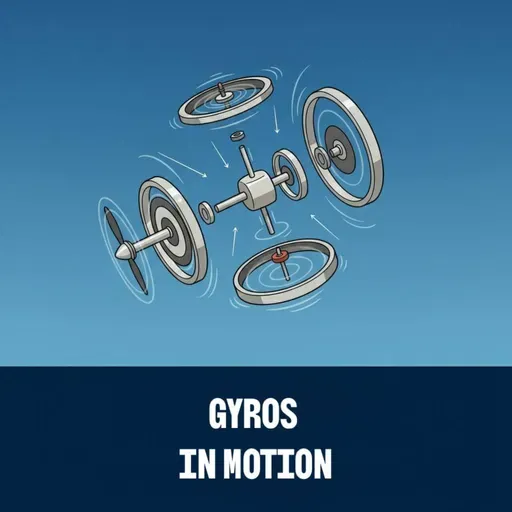
In this episode, we unpack the fascinating world of gyroscopic flight instruments—the quiet, spinning heroes that keep pilots oriented and aircraft under control. You’ll learn how two fundamental principles, rigidity in space and precession, allow the attitude indicator, heading indicator, and turn coordinator to deliver steady, reliable information even as the aircraft maneuvers through three dimensions. We’ll explore how mounting systems shape an instrument’s behavior, why gyros drift, and how pilots correct for these subtle quirks in flight.
Then we dive into the power systems behind these instruments, examining the vacuum, pressure, and electrical sources that keep the gyros spinning. From the engine-driven vacuum pump to the 4.5–5.5 "Hg operating range, you’ll hear how redundancy is built into aircraft systems—and what happens when suction drops below safe limits. Whether you're a pilot, student, or aviation enthusiast, this episode will give you a clear and practical understanding of the physics and power systems behind the gyroscopic instruments you rely on every flight.