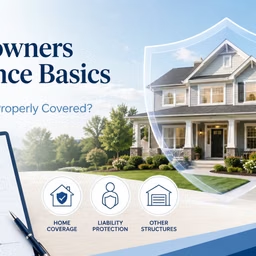
A homeowners insurance policy does more than protect the physical structure of your house. It can also cover personal belongings, detached structures, temporary living expenses, and personal liability.
Because every property and household is different, homeowners should regularly review their coverage with a licensed insurance agent. Changes to the home, property use, or household assets could affect whether the current policy provides adequate protection.
Start With Ownership and Property Use (2:22)
Choosing the right insurance policy begins with two basic questions: Who owns the property, and how is it being used?
A primary residence owned by an individual will typically require a traditional homeowners policy. Other situations may need a different type of coverage:
Condominium owners generally need an HO-6 policy.
Renters can purchase an HO-4 renters policy.
Rental property owners may need a landlord or dwelling policy.
Homes owned by a trust or limited liability company may require additional consideration.
Properties used for farming or business purposes may need specialized coverage.
The policy should accurately reflect both the legal ownership and actual occupancy of the property. Failing to disclose how a property is being used can create serious coverage problems when a claim occurs.
Renters Need Property and Liability Protection (3:30)
Renters insurance is sometimes viewed as optional because the tenant does not own the building. However, the landlord’s insurance generally does not protect the tenant’s personal belongings or personal liability.
A renters policy can help cover furniture, electronics, clothing, and other possessions following a covered loss. It may also provide personal liability protection if the tenant is accused of causing injury or property damage.
For example, if a renter’s dog bites someone, liability coverage may help provide a legal defense and pay covered damages. Without renters insurance, those expenses may become the tenant’s personal responsibility.
Dwelling Coverage Should Reflect Rebuilding Cost (5:20)
Coverage A is the portion of a homeowners policy that applies to the primary dwelling. The amount should be based on what it would cost to rebuild the house, not necessarily its selling price or tax value.
Market value includes factors that do not directly affect reconstruction costs, including the property’s location and land value. A lakefront home may have a significantly higher market value than an identical home located elsewhere, even though both houses may cost approximately the same amount to rebuild.
Insurance agencies often use replacement cost estimators that consider:
Square footage
Number of rooms
Construction type
Roofing and exterior materials
Kitchen and bathroom finishes
Custom features
Renovations and improvements
These estimators are helpful, but they are still estimates. A local builder or qualified appraiser may be able to provide additional guidance about current rebuilding costs.
Avoid Being Underinsured or Overinsured (8:00)
Construction costs can change quickly as the prices of labor, materials, and contractor services increase. A dwelling limit selected several years ago may no longer be sufficient to rebuild the same home today.
Being underinsured could leave the homeowner responsible for a significant portion of reconstruction expenses. At the same time, carrying an unnecessarily high limit may result in paying additional premium for coverage that does not provide a greater claim payment.
Homeowners should review their dwelling limit regularly, especially after completing an addition, remodeling a kitchen, finishing a basement, or making other major improvements.
Review Coverage for Other Structures (14:00)
Coverage B generally applies to structures that are separated from the main house. This may include:
Detached garages
Storage buildings
Barns
Fences
Workshops
Gazebos
Boat docks
Detached offices
Many homeowners policies automatically provide other-structures coverage equal to a percentage of the dwelling limit, often around 10 percent. For example, a home insured for $500,000 might automatically include $50,000 in coverage for detached structures.
That amount may be sufficient for a small shed or fence, but it may not be enough for a large barn, custom workshop, detached living space, or expensive boat dock. These structures should be discussed individually with an agent to determine whether additional coverage is needed.
Disclose Business and Agricultural Use (16:20)
How a detached structure is used can be just as important as its value.
A barn used for personal storage may be treated differently from a building used to house animals, operate a contracting business, store commercial equipment, or maintain a farm. Business and agricultural activities may be limited or excluded under a standard homeowners policy.
Homeowners should disclose the number of animals, property acreage, commercial equipment, office use, and any other business activity taking place on the property. The goal is not simply to obtain a quote. It is to make sure the policy is structured correctly before a loss occurs.
Do Not Overlook Equipment, Boats, and Recreational Vehicles (18:00)
Tractors, lawn equipment, golf carts, ATVs, boats, and personal watercraft may require separate coverage or endorsements.
Coverage can also change depending on where and how the equipment is used. A tractor used only to maintain the insured property may be treated differently once it is taken off the premises to help a neighbor.
Liability may be the greatest concern. Replacing a damaged jet ski can be expensive, but an accident that injures another person could result in a much larger financial loss.
Consider Additional Umbrella Liability Coverage (20:00)
A personal umbrella policy provides liability protection above the limits of certain underlying policies, such as homeowners and auto insurance.
Umbrella coverage may be particularly valuable for households with boats, recreational vehicles, rental properties, substantial assets, frequent visitors, or other elevated liability exposures. Eligibility and coverage requirements vary, so homeowners should review their underlying policies and umbrella options with a licensed agent.
Homeowners insurance should change as the home, property, and household change. A regular insurance review can help identify outdated dwelling limits, missing structures, undisclosed property uses, and liability risks before they become costly problems.
Coverage varies by insurance company, policy form, and state. All coverage is subject to the terms, conditions, limitations, and exclusions of the policy issued. Consult a licensed insurance agent about your individual situation.