Polish Made Easy: “Grać” (Play) in Music, Sports, and Games
Learn Polish with Erni School
VIP members practice with flashcards https://app.learn-polish.pl/flashcards/xsgzb7qr9GKRRi5h4KY9
Live lessons for VIP members https://app.learn-polish.pl/videos/xsgzb7qr9GKRRi5h4KY9
Learn Polish Through Real Conversation: Weather, “Grać”, and Everyday Life
Learning Polish doesn’t have to start with heavy grammar or long explanations.
It can start with simple words, real questions, and normal conversation — exactly like in real life.
In this lesson, we focused on a few very practical elements that beginners can use immediately:
greetings
talking about the weather
the verb grać (to play)
and two very useful words: podobno and kiedyś
Let’s break it down.
1. Starting a conversation in Polish
In real conversations — especially online or in group lessons — these phrases are everywhere:
Dzień dobry.
Good morning.
Cześć.
Hi.
Czy mnie widać?
Can you see me?
Czy mnie słychać?
Can you hear me?
Czy jest okej?
Is it OK?
These are simple, but extremely useful.
If you know these, you can already participate.
2. Small talk everyone uses: the weather
In Poland, talking about the weather is not small talk — it’s survival 😄
Jest zimno.
It’s cold.
U nas jest bardzo zimno.
It’s very cold where we are.
Dzisiaj będzie minus dziesięć.
Today it will be minus ten.
And one key word appears all the time:
Podobno
Apparently / people say
Podobno będzie minus dwadzieścia.
Apparently it will be minus twenty.
You don’t need to be sure — podobno is perfect when you’re not.
3. One powerful verb: grać (to play)
With just one verb, you can talk about:
music
sports
games
hobbies
Basic forms:
Ja gram. – I play.
Ty grasz. – You play.
On / Ona gra. – He / She plays.
4. “Grać na” vs “Grać w” (very important)
🎸 Instruments → grać na
Gram na gitarze.
I play the guitar.
Kimberly gra na pianinie.
Kimberly plays the piano.
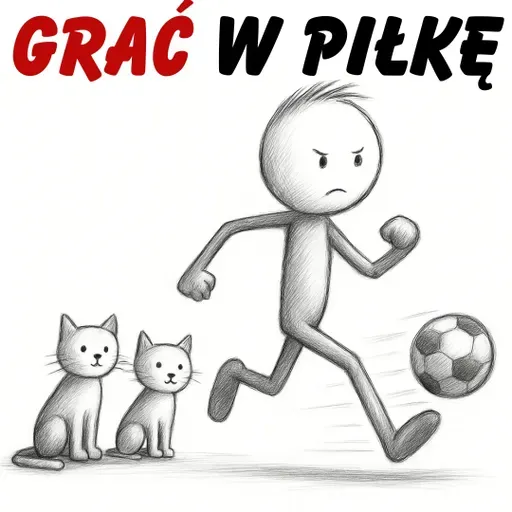
⚽ Sports & games → grać w
Gram w piłkę nożną.
I play football.
Gram w szachy.
I play chess.
This distinction comes back again and again in Polish — learning it early helps a lot.
5. Talking about Sunday plans (real life Polish)
This question is extremely common:
Co robisz w niedzielę?
What are you doing on Sunday?
Possible simple answers:
Idę do kościoła. – I’m going to church.
Gram w kościele. – I play in church.
Potem idę do domu. – Then I go home.
Gram w szachy. – I play chess.
Nothing fancy. Just real Polish.
6. Talking about the past: kiedyś
Another very useful word:
Kiedyś = used to / long ago
Kiedyś grałem w piłkę.
I used to play football.
Teraz już nie gram.
Now I don’t play anymore.
This lets you talk about your life naturally, even with very basic Polish.
Key takeaways
If you remember only this, you’re doing great:
grać na → instruments
grać w → sports & games
podobno → apparently / people say
kiedyś → used to
Weather talk = everyday Polish
Simple sentences are enough to communicate
Want to keep learning Polish?
If you enjoy learning Polish in a calm, practical, beginner-friendly way, you’re very welcome to join us.
You can:
📍 visit our small language school in Lębork, in Northern Poland near the Baltic Sea, or
💻 learn online with us every Monday, Tuesday, and Wednesday
We also offer extra support for total beginners — just let us know.
Learning Polish can be simple, human, and even fun.
Thanks for learning with us.
Learn Polish in Poland or online https://www.learn-polish.pl/