02 April 2026
What we know so far about the 26 Korean ships stranded in the Strait of Hormuz
Korea JoongAng Daily - Daily News from Korea
About
This article is by Sarah Chea, Park Eun-jee and read by an artificial voice.
[EXPLAINER]
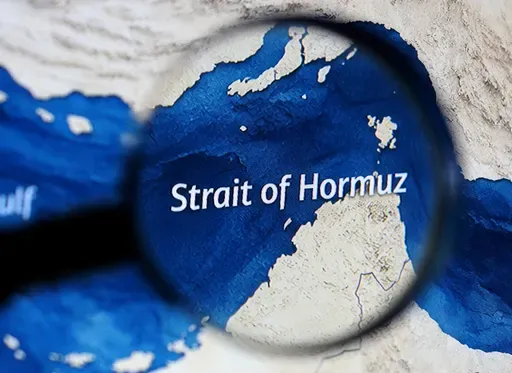
The outbreak of the Iran war has left the fate of 26 Korean-flagged vessels stranded in the Strait of Hormuz uncertain as cease-fire talks drag on more than a month into the conflict.
Many of the Korean ships carrying crude oil and goods such as cars have ties to the United States and are therefore subject to scrutiny by Iran. Even as the possibility of a cease-fire is raised, developments in the Strait of Hormuz appear to be unfolding on a separate track, increasing the likelihood that Iran will continue to exert control over the waterway — including by imposing transit fees.
No serious harm to the crew has been reported so far, though some are said to be suffering from trauma after witnessing airstrikes unfold at close range. But the financial toll is mounting, with each isolated vessel reportedly incurring costs of up to $1.43 million per day.
Q. How are Korean ships and crews faring in the Strait of Hormuz?
A total of 26 Korean–flagged vessels remain stranded in the Strait of Hormuz, carrying some 600 crew members, including 136 Korean nationals.
An additional 37 Koreans are aboard 11 foreign-flagged ships, bringing the total number of stranded Korean nationals in the waterway to 173.
Of the 26 ships, 16 are operated by nine major shipping companies, while eight smaller firms operate the remaining 10. Five of the ships are owned by HMM, the country's largest shipping line.
Seven are very large crude carriers (VLCCs), along with a mix of petrochemical tankers, bulk carriers, container ships and car carriers, carrying a broad spectrum of industrial essentials, including crude oil, petrochemicals, fertilizers, steel and ammonia.
While countries such as Japan, Indonesia and Thailand have secured safe passage for their vessels through separate negotiations with Iran, Korea has refrained from pursuing bilateral talks, maintaining a cautious stance given its ties with the United States.
Q. What is Iran's stance?
Although Tehran labels Korea a "nonhostile" nation, not a single Korean-flagged vessel has succeeded in exiting the Strait of Hormuz since the blockade.
Iran has previously warned that it barred ships from countries it considers hostile — or allied with the United States and Israel — from transiting the waterway. Yet on March 26, Iranian Ambassador to Korea Saeed Koozechi told the Korean press that Korea is "nonhostile," suggesting that the current blockade is linked to Korea's extensive trade ties with the United States.
Koozechi also said Iran is detaining ships belonging to Saudi Arabia's Aramco, the world's largest oil company, citing its collaboration with U.S. oil firms behind its growth, at an interview with Maeil Business Newspaper on Wednesday.
Korea imported a record 174.89 million barrels of crude oil from the United States last year, making it its second-largest supplier after Saudi Arabia, with imports valued at $12.88 billion, according to data from the Korea National Oil Corporation.
With crude oil supplies disrupted by the Strait of Hormuz blockade, Korea is seeking to expand imports of U.S. oil as an alternative source.
In refined fuels such as jet fuel, Korea is the United States' top source, with a roughly 70 percent share due to the technical demands of refining fuel for aircraft operating at high altitudes and low temperatures. If Korea can't source crude from the Middle East, where it relies on around 70 percent of its total imports, it could disrupt jet fuel supplies in the United States.
Q. What are the projected economic losses from the stranded vessels?
Exact figures are difficult to determine, but the Korea Shipowners' Association estimates that the 26 stranded Korean vessels are collectively losing over $1.43 million per day.
Fixed capital costs alone — including charter fees and loan repayments — amount to a collective $630,000 per day, while war-risk insurance premiums run $560,000, and fuel costs a...
[EXPLAINER]
The outbreak of the Iran war has left the fate of 26 Korean-flagged vessels stranded in the Strait of Hormuz uncertain as cease-fire talks drag on more than a month into the conflict.
Many of the Korean ships carrying crude oil and goods such as cars have ties to the United States and are therefore subject to scrutiny by Iran. Even as the possibility of a cease-fire is raised, developments in the Strait of Hormuz appear to be unfolding on a separate track, increasing the likelihood that Iran will continue to exert control over the waterway — including by imposing transit fees.
No serious harm to the crew has been reported so far, though some are said to be suffering from trauma after witnessing airstrikes unfold at close range. But the financial toll is mounting, with each isolated vessel reportedly incurring costs of up to $1.43 million per day.
Q. How are Korean ships and crews faring in the Strait of Hormuz?
A total of 26 Korean–flagged vessels remain stranded in the Strait of Hormuz, carrying some 600 crew members, including 136 Korean nationals.
An additional 37 Koreans are aboard 11 foreign-flagged ships, bringing the total number of stranded Korean nationals in the waterway to 173.
Of the 26 ships, 16 are operated by nine major shipping companies, while eight smaller firms operate the remaining 10. Five of the ships are owned by HMM, the country's largest shipping line.
Seven are very large crude carriers (VLCCs), along with a mix of petrochemical tankers, bulk carriers, container ships and car carriers, carrying a broad spectrum of industrial essentials, including crude oil, petrochemicals, fertilizers, steel and ammonia.
While countries such as Japan, Indonesia and Thailand have secured safe passage for their vessels through separate negotiations with Iran, Korea has refrained from pursuing bilateral talks, maintaining a cautious stance given its ties with the United States.
Q. What is Iran's stance?
Although Tehran labels Korea a "nonhostile" nation, not a single Korean-flagged vessel has succeeded in exiting the Strait of Hormuz since the blockade.
Iran has previously warned that it barred ships from countries it considers hostile — or allied with the United States and Israel — from transiting the waterway. Yet on March 26, Iranian Ambassador to Korea Saeed Koozechi told the Korean press that Korea is "nonhostile," suggesting that the current blockade is linked to Korea's extensive trade ties with the United States.
Koozechi also said Iran is detaining ships belonging to Saudi Arabia's Aramco, the world's largest oil company, citing its collaboration with U.S. oil firms behind its growth, at an interview with Maeil Business Newspaper on Wednesday.
Korea imported a record 174.89 million barrels of crude oil from the United States last year, making it its second-largest supplier after Saudi Arabia, with imports valued at $12.88 billion, according to data from the Korea National Oil Corporation.
With crude oil supplies disrupted by the Strait of Hormuz blockade, Korea is seeking to expand imports of U.S. oil as an alternative source.
In refined fuels such as jet fuel, Korea is the United States' top source, with a roughly 70 percent share due to the technical demands of refining fuel for aircraft operating at high altitudes and low temperatures. If Korea can't source crude from the Middle East, where it relies on around 70 percent of its total imports, it could disrupt jet fuel supplies in the United States.
Q. What are the projected economic losses from the stranded vessels?
Exact figures are difficult to determine, but the Korea Shipowners' Association estimates that the 26 stranded Korean vessels are collectively losing over $1.43 million per day.
Fixed capital costs alone — including charter fees and loan repayments — amount to a collective $630,000 per day, while war-risk insurance premiums run $560,000, and fuel costs a...