03 April 2026
Exclusive: Korea ramps up Canadian crude imports as Iran war disrupts Middle Eastern supply
Korea JoongAng Daily - Daily News from Korea
About
This article is by Sarah Chea and read by an artificial voice.
Korean oil refiners have begun importing sizable volumes of Canadian crude — long a marginal and rarely used option — as they scramble to replace disrupted Middle Eastern supplies amid the protracted Iran war.
Prior to the outbreak of the Iran war, refiners had only brought in Canadian crude in small volumes on a trial basis last year, but have since been sharply ramping up the purchases.
The shift comes as Canada's export capacity to Asia has been surging following the completion of a major pipeline expansion project in 2024, potentially encouraging Seoul to give greater prominence to Canadian crude in its future import portfolio.
"Korean refiners are actively bringing in Canadian crude as an alternative supply amid the current inability to secure Middle Eastern barrels," a government official overseeing the country's oil imports told the Korea JoongAng Daily.
Still, most of Korea's alternative supply comes from the United States, and Canadian crude remains a secondary option rather than a mainstream source. Despite being cheaper than Middle Eastern or U.S. grades, it is a high-sulfur heavy oil, while Korea's refining infrastructure is primarily optimized for Middle Eastern crude.
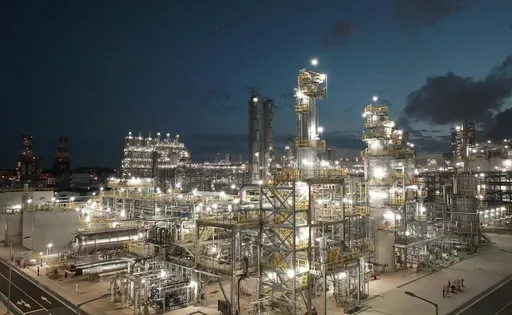
Leading the charge is HD Hyundai Oilbank, the refiner equipped with facilities capable of processing Canadian crude, whose dependence on Middle Eastern oil — at 60 percent — is the lowest among its peers.
HD Hyundai Oilbank in April last year became the first in Korea to import 548,000 barrels of Canadian crude, worth $82.3 million, after the start of U.S. President Donald Trump's second term.
"Since last year, we began preparing for potential instability in Middle Eastern supply by modifying pipelines and related infrastructure to accommodate Canadian crude," said a spokesperson for HD Hyundai Oilbank.
"Whereas our non-Middle Eastern imports were previously dominated by Mexican crude, we plan to gradually increase Canadian volumes."
SK Energy and GS Caltex are also pushing to secure Canadian crude. S-Oil, a subsidiary of Saudi Aramco, continues to rely almost entirely on Middle Eastern oil but has indicated that it could consider foreign crude under the right conditions in the event of unavoidable disruptions such as war.
Korea's imports of Canadian crude, which stood at zero barrels in 2023, rose to 1.37 million barrels in 2024 and surged to 4.54 million barrels last year, according to data from the Korea National Oil Corporation. While the volume has tripled in just a year, it still accounts for only about 0.5 percent of Korea's total crude imports.
Moreover, Canada has been actively working to increase exports to Asia, including Korea, as a means of seeking to reduce its long-standing dependence on the United States, which accounts for more than 95 percent of its crude exports. Canada completed the long-awaited Trans Mountain pipeline expansion in May 2024, linking Alberta to the Vancouver area in British Columbia, which nearly tripled the volume of crude arriving at the port of Vancouver.
In practice, the landed cost of Canadian crude to Korea was $64.65 per barrel as of 2025, roughly $10 cheaper than U.S. crude at $73.64 and Saudi Arabian crude at $73.80 per barrel.
The Korean government's crude swap system is also expected to play a role in expanding Canadian imports. With Middle Eastern supply constrained, the Korean government has agreed with four domestic refiners to allow crude imported from other countries to be exchanged for government-held Middle Eastern reserves.
Around 20 million barrels are slated for such swaps, with 2 million barrels already released to a refiner on Tuesday.
Korean oil refiners have begun importing sizable volumes of Canadian crude — long a marginal and rarely used option — as they scramble to replace disrupted Middle Eastern supplies amid the protracted Iran war.
Prior to the outbreak of the Iran war, refiners had only brought in Canadian crude in small volumes on a trial basis last year, but have since been sharply ramping up the purchases.
The shift comes as Canada's export capacity to Asia has been surging following the completion of a major pipeline expansion project in 2024, potentially encouraging Seoul to give greater prominence to Canadian crude in its future import portfolio.
"Korean refiners are actively bringing in Canadian crude as an alternative supply amid the current inability to secure Middle Eastern barrels," a government official overseeing the country's oil imports told the Korea JoongAng Daily.
Still, most of Korea's alternative supply comes from the United States, and Canadian crude remains a secondary option rather than a mainstream source. Despite being cheaper than Middle Eastern or U.S. grades, it is a high-sulfur heavy oil, while Korea's refining infrastructure is primarily optimized for Middle Eastern crude.
Leading the charge is HD Hyundai Oilbank, the refiner equipped with facilities capable of processing Canadian crude, whose dependence on Middle Eastern oil — at 60 percent — is the lowest among its peers.
HD Hyundai Oilbank in April last year became the first in Korea to import 548,000 barrels of Canadian crude, worth $82.3 million, after the start of U.S. President Donald Trump's second term.
"Since last year, we began preparing for potential instability in Middle Eastern supply by modifying pipelines and related infrastructure to accommodate Canadian crude," said a spokesperson for HD Hyundai Oilbank.
"Whereas our non-Middle Eastern imports were previously dominated by Mexican crude, we plan to gradually increase Canadian volumes."
SK Energy and GS Caltex are also pushing to secure Canadian crude. S-Oil, a subsidiary of Saudi Aramco, continues to rely almost entirely on Middle Eastern oil but has indicated that it could consider foreign crude under the right conditions in the event of unavoidable disruptions such as war.
Korea's imports of Canadian crude, which stood at zero barrels in 2023, rose to 1.37 million barrels in 2024 and surged to 4.54 million barrels last year, according to data from the Korea National Oil Corporation. While the volume has tripled in just a year, it still accounts for only about 0.5 percent of Korea's total crude imports.
Moreover, Canada has been actively working to increase exports to Asia, including Korea, as a means of seeking to reduce its long-standing dependence on the United States, which accounts for more than 95 percent of its crude exports. Canada completed the long-awaited Trans Mountain pipeline expansion in May 2024, linking Alberta to the Vancouver area in British Columbia, which nearly tripled the volume of crude arriving at the port of Vancouver.
In practice, the landed cost of Canadian crude to Korea was $64.65 per barrel as of 2025, roughly $10 cheaper than U.S. crude at $73.64 and Saudi Arabian crude at $73.80 per barrel.
The Korean government's crude swap system is also expected to play a role in expanding Canadian imports. With Middle Eastern supply constrained, the Korean government has agreed with four domestic refiners to allow crude imported from other countries to be exchanged for government-held Middle Eastern reserves.
Around 20 million barrels are slated for such swaps, with 2 million barrels already released to a refiner on Tuesday.