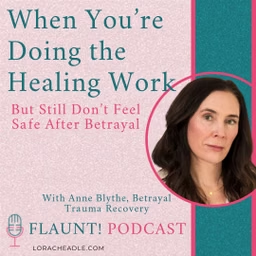
When You’re Doing the Healing Work—but Still Don’t Feel Safe After Betrayal With Anne Blythe, M.Ed., Founder of Betrayal Trauma Recovery
FLAUNT! Create a Life You Love After Infidelity or Betrayal
After betrayal, women are often told to heal. Regulate your nervous system. Stop obsessing. Work on your triggers. Communicate better. Go to therapy. Learn to trust again. So you do…
But what happens when you've read the books, done the therapy, practiced the tools, and worked incredibly hard—and your body still doesn't feel safe?
Maybe the problem isn't that you're failing at healing. Maybe your nervous system is responding to something that is still happening.
In this episode, Lora Cheadle talks with Anne Blythe, M.Ed., founder of Betrayal Trauma Recovery, host of The Betrayal Trauma Recovery Podcast, and creator of the Clarity After Betrayal Workshop, about one of the most confusing parts of betrayal recovery: learning to distinguish between the trauma of what happened in the past and harm that may still be occurring in the present.
Anne challenges conventional betrayal-recovery models by asking women to consider whether what they've been treating solely as a relationship problem may also involve patterns of control, coercion, exploitation, or emotional and psychological abuse.
Drawing from Anne's lived experience and her extensive interviews with betrayed women, Lora and Anne explore gaslighting, intimate deception, sexual coercion, and why certain approaches to couples therapy can sometimes make an already confusing situation even harder to see clearly.
They also tackle the question so many women desperately want answered:
How do I know if he's really changing—or simply getting better at saying and doing the right things?
Words can sound wonderful. Promises can bring tremendous relief. A partner may appear calmer, more attentive, more remorseful, or more committed to recovery.
But genuine change isn't something you should have to manufacture for him—or manage with a checklist.
The goal is to become grounded enough in yourself that you can step back, observe what is actually happening, protect your emotional and psychological safety, and make decisions based on reality rather than fear, hope, pressure, or someone else's instructions.
And importantly, this conversation is not about telling women to stay or leave.
Recognizing harmful behavior does not automatically dictate divorce. Likewise, choosing to stay does not mean tolerating behavior that is unsafe or unacceptable.
The goal is clarity, safety, strategy, and trusting yourself enough to determine what is right for your own life.
Top of Form
Bottom of Form
Top 3 Takeaways
If you're doing the healing work but still don't feel safe, don't automatically assume you're doing something wrong.
After betrayal, women can become so focused on regulating themselves and becoming "less reactive" that they interpret every continued nervous-system response as evidence they haven't healed enough. But if deception, manipulation, coercion, or other harmful behavior is ongoing, your body may be responding to what is happening in the present—not simply reacting to the past.
Don't evaluate change by words alone. Create enough emotional space to observe what is actually happening.
Anne recommends giving yourself small breaks from the pain so your entire day isn't consumed by betrayal. From a more regulated place, you can begin observing your partner's behavior rather than relying solely on reassurance or promises. Genuine change becomes something you witness over time—not something you have to coach, manage, or convince yourself is happening.
You don't have to decide "stay or leave" before you learn how to protect yourself. Emotional and psychological safety strategies can matter whether you remain married, separate, reconcile, or eventually divorce. The goal isn't for someone else to tell you what you "have to" do. It's to understand what you're dealing with, gather the legal, financial, emotional, and practical information you need, and develop a strategy that allows you to make decisions from clarity instead of coercion or fear.
Favorite Quotes
“You can't heal inside ongoing trauma.” — Lora Cheadle
“Trusting that women know what the right thing for them is is part of what we do at BTR.” — Anne Blythe
“They can heal or not, and I'm still in charge of me.” — Lora Cheadle
About Anne Blythe, M.Ed.
Anne Blythe, M.Ed., is the founder and executive director of Betrayal Trauma Recovery, producer and host of The Betrayal Trauma Recovery Podcast, author of Trauma Mama Husband Drama, and creator of the Clarity After Betrayal Workshop.
Anne brings both professional expertise and lived experience to her work. After experiencing betrayal trauma during her marriage and for years following her divorce, she developed a trauma-informed, victim-centered approach designed to help women recognize harmful patterns, understand what is actually happening in their relationships, and respond with greater clarity, safety, and strategy.
Her work is informed by extensive qualitative research, including more than 220 in-depth interviews with women who have experienced marital betrayal.
Learn more about Anne and Betrayal Trauma Recovery
About Lora
Lora Cheadle, JD, CHt, is a betrayal recovery expert, attorney, TEDx speaker, hypnotherapist, and author who helps women whose lives have been turned upside down by infidelity figure out what’s true, what can actually be fixed, and what to do next. Through her signature Life Choreography® Method, she integrates legal insight, nervous system regulation, somatic practices, hypnotherapy, and spiritual support to help women rebuild self-trust, advocate for what they need, and reclaim the parts of themselves they sacrificed along the way, so they can make their next chapter about them.
Resources & Links
Download the free Betrayal Recovery Guide: https://betrayalrecoveryguide.com
Book your Introductory Session: https://introductorysession.com
Follow on YouTube, Instagram, and Facebook @loracheadle
This podcast is sponsored by BetterHelp.
Healing after betrayal often requires more than insight alone. Therapy can provide additional support, stabilization, and guidance as you navigate the emotional impact of infidelity and betrayal trauma.
💛 BetterHelp listeners receive 10% off their first month: www.betterhelp.com/FLAUNT
LOVE THE SHOW? TAKE THE NEXT STEP
Don’t just listen—start healing.
Download your FREE Betrayal Recovery Tool Kit and take back your power with clarity, confidence, and support that meets you where you are.
✅ Calm the chaos
✅ Rebuild self-trust
✅ Stop the spiral of second-guessing
✅ Reclaim your worth and your future
👉 Download Now ➜ www.BetrayalRecoveryGuide.com (MAKE THIS A BUTTON)
You deserve more than survival. You deserve sovereignty, peace, and joy.
📚 Books By Lora 📚
International Book Award, Finalist Motivational Self-Help 2021
• Tattered Cover Bestseller 2019
Are you tired of living a life dictated by others? If you've felt trapped by expectations and long o be free, FLAUNT! is the key to unlocking who you are, expressing yourself authentically, and choreographing your life your way.
Reclaim yourself with this transformative guide that empowers you to strip away societal expectations and reveal your smart, sexy, and spiritual self.
Through a unique blend of humor, wisdom, and actionable steps, you can uncover your deepest desires and build the confidence to live a life full of passion and purpose.
Buy Now on Amazon, or wherever books are sold.
It's Not Burnout, It's Betrayal: 5 Tools to FUEL UP & Thrive, is the essential guide for burnout and betrayal relief. Packed with insight and practical tools, this book is a must-have for individuals, teams, and leaders alike.
Available on Amazon.
Learn more at www.itsnotburnoutitsbetrayal.com
📌 Hashtags:
#BetrayalRecovery #InfidelityRecovery #BetrayalTrauma #HealingAfterInfidelity #NervousSystemHealing #SomaticHealing #EmotionalHealing #LoraCheadle #TraumaRecovery #SelfTrust