21 October 2026
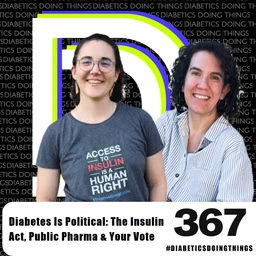
Episode 367 - Diabetes Is Political: The Insulin Act, Public Pharma & Your Vote with T1 International
Diabetics Doing Things Podcast
About
A lot of people think the $35 copay cap fixed insulin. For most of us, it
didn't. In 2024, 36% of people responding to T1 International's
out-of-pocket survey said they were rationing insulin, twice the rate in
2016. With midterms weeks away and the Insulin Act up in both the House and
Senate, we brought in two people who have been in the room for this fight
for years.
Shaina Kasper, Executive Director of T1 International, returns to the show
alongside first-time guest Kristen Whitney Daniels, who co-leads T1I's
federal working group with Shaina. Both live with type 1, and both have
rationed insulin themselves. Kristen walks through the Insulin Act in plain
language: the difference between a copay cap and a true price cap, why the
IRA only covered part of the Medicare market, and how the House and Senate
versions differ. One of the biggest differences is only the Senate bill
includes a pilot program for people without insurance, which is why T1
International endorsed the bill for the first time.
From there, Kristen and Shaina explain exactly what to say when you call or
email your representatives They explain why your personal story matters
more than any statistic, and why 2026 is T1I's Year of Public Pharma:
California's CalRx glargine at $55 for five pens, Connecticut's ArrayRx
discount card, and a tribal nation studying generic manufacturing. We close
on patent reform, maybe the least flashy but It's what gives public
manufacturers and biosimilar makers the legal room to compete and bring
prices down for the long haul.
Diabetes is political, which means your story matters. Email your
representatives about the Insulin Act, because your story could be the one
that moves the right person.
Chapters
00:00 Why the Insulin Act matters before midterms
04:20 How T1 International became a global movement
08:15 Copay cap vs. price cap, explained simply
11:47 Why people think insulin is already fixed
13:13 Who the Insulin Act helps and misses
14:33 Insulin rationing has doubled since 2016
16:12 Senate vs. House: the uninsured pilot program
18:29 Insurance gaps and the 2027 coverage squeeze
22:38 What lawmakers don't know about diabetes
25:53 Storytelling lessons from Magic Johnson
27:47 How to call or email Congress
31:54 Why 2026 is the Year of Public Pharma
34:08 Discount cards, GoodRx, and pharmacy closures
36:34 ArrayRx and a tribal-nation manufacturing study
39:07 Patent reform and the December 11 deadline
Resources:
T1 International: Take Action: Email your House rep and both senators about
the Insulin Act
2025 Impact Report
Start a Fundraiser
CalRx Biosimilar Insulin Initiative
ArrayRx discount card
Donate to T1 International
T1 International Access Survey: over 30% of people rationed insulin due to
cost in 2024
ADA 2026 National Access and Affordability Survey: 41% rationed due to cost
last year, and 2 in 3 reported higher out-of-pocket insulin costs in 2026
than in 2025
Health Affairs research: a quarter of adults with type 1 have experienced a
lapse in insurance coverage
KFF: Key Facts About the Uninsured Population