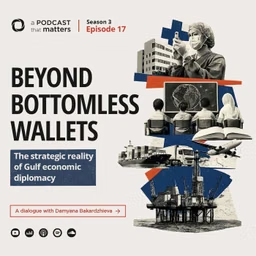
Beyond Bottomless Wallets: The Strategic Reality of Gulf Economic Diplomacy. A Dialogue with Damyana Bakardzhieva
DevelopmentAid Dialogues
As the ongoing U.S./Israel–Iran war reverberates across the region—affecting energy markets, transport routes, and economic stability in the Middle East and North Africa—the question for the development sector is becoming more urgent: can Gulf donors sustain their expanding role in global aid, or will their priorities shift inward?
In this episode of DevelopmentAid Dialogues, podcast host Hisham Allam spoke with Dr. Damyana Bakardzhieva, Senior Research Fellow at the Anwar Gargash Diplomacy Academy, to examine whether the Gulf’s rise as a development partner is resilient, or more constrained than headlines suggest.
Bakardzhieva pushed back on the idea that Gulf countries are simply stepping in to replace Western donors. “There are two fundamental flaws with that narrative,” she explained. “The first is to consider that the Gulf approach to foreign aid is purely opportunistic. Their approach is way more strategic and structured than this kind of reasoning would assume.”
She warned against overstating the scale of Gulf contributions. “The second flaw is to consider the Gulf countries as bottomless wallets on standby,” she said. Referring to recent OECD data published in April 2026, she noted that even a significant increase in Gulf aid would fall far short of compensating for Western cuts. “Even if they were to double their 2025 foreign aid contributions, the UAE, Qatar, and Kuwait would only be adding four and a half to five billion dollars,” she said, compared to “over US$40 billion” withdrawn by Development Assistance Committee countries in the past two years. “No matter how much the Gulf countries contribute extra, they cannot compensate for the major gaps.”
She also pointed to structural differences in how aid is delivered. “A lot of Western aid has traditionally been tied,” she explained, often limiting how recipients can use it. “The case of Gulf aid is different. It is not tied aid in general.” That flexibility, combined with regional priorities, shapes where funding flows.
Bakardzhieva drew a distinction between redirection and retrenchment. “Geopolitical conflicts lead to increased aid within that region,” she said, adding “though often in the form of humanitarian assistance.” Broader macroeconomic pressures—rising energy prices, inflation, and constrained fiscal space—could also affect aid globally. “With the same amount of cash, you can basically purchase much less real goods,” she noted.
However, she argued that Gulf countries are structurally better positioned than most to maintain commitments. “They have very strong fiscal fundamentals and well-stocked sovereign wealth funds,” she said. While defense spending may rise, “they do not need to redirect aid spending into defense spending.”
Listen to the full episode with Damyana Bakardzhieva on DevelopmentAid Dialogues. Stay informed and stay engaged.
The podcast is sponsored by DevelopmentAid. Procurement notices, funding and grants to opportunities, lists of potential partners, insights into market trends, databases of development professionals, webinars, latest news, and much more. Stay informed and connected.
Subscribe and Stay Connected