06 November 2026
Saturday of the Thirty-first Week in Ordinary Time - The Abomination of Attachment
Catholic Daily Reflections
About
Read Online
Jesus said to his disciples: “I tell you, make friends for yourselves with dishonest wealth, so that when it fails, you will be welcomed into eternal dwellings. The person who is trustworthy in very small matters is also trustworthy in great ones; and the person who is dishonest in very small matters is also dishonest in great ones.” Luke 16:9–10
Today’s Gospel begins with a perplexing command: “Make friends for yourselves with dishonest wealth, so that when it fails, you will be welcomed into eternal dwellings.” At first glance, Jesus seems to present a contradiction. How can wealth that is described as “dishonest” be something we are encouraged to use to make friends?
In this passage, the phrase “dishonest wealth” does not refer primarily to money obtained through immoral means, such as theft or fraud. Rather, it refers to this world’s temporal wealth, which is often tainted by human sin and selfishness. It is “unrighteous” in that it is fleeting, easily misused, and frequently becomes an idol. Yet Jesus teaches that even this worldly wealth can become a source of grace when used rightly—that is, when it is placed at the service of the Kingdom of God.
To “make friends” with this wealth means to use it for works of mercy: feeding the hungry, sheltering the homeless, caring for the poor, and supporting the Church. These acts of love create spiritual bonds—“friends” who will, as Jesus says, “welcome you into eternal dwellings.” The saints and the poor who benefit from our charity may become our intercessors before God. In this way, temporal goods are transformed into eternal treasure.
Think about money. How do you see it? The lure of money is strong. It’s very common for people to daydream about becoming rich. We might imagine the nice vacations we can take, the new car or homes we can purchase, and the temporal security we could enjoy. As a side thought, we might also think about the good we could do for family and others.
Because this lure is often strong, we need to be vigilant when it comes to money and material possessions. It’s easy to justify wealth, just as the Pharisees did. But what Jesus said to them, He will also say to us when we are overly attached to wealth and use what we have selfishly: “You justify yourselves in the sight of others, but God knows your hearts; for what is of human esteem is an abomination in the sight of God” (Luke 16:15). The selfish attachment to money and material possessions is “an abomination in the sight of God.”
This can be difficult to hear, so it is beneficial to meditate on this Gospel passage. Everything Jesus said is meant to draw us out of the foolishness of sinful attachments—abominations is God’s sight—and into the wisdom of spiritual purity and poverty of heart.
Jesus follows His lesson on dishonest wealth with a lesson in integrity: “The person who is trustworthy in very small matters is also trustworthy in great ones.” Faithfulness in seemingly minor responsibilities reveals the moral character that prepares us for greater spiritual stewardship. In God’s eyes, material wealth is a very small matter—that is, God doesn’t hope and pray that we are generous because He needs our money. He desires that we are generous because of the virtue it forms in us, as well as the benefit it brings to others. If, therefore, we misuse even the very small matter of material wealth, how can we be entrusted with the true riches of grace?
Reflect today on how you see money. How deeply does it affect your imagination, your choices, and your peace? The pull of wealth is strong, but grace is stronger. If you find within yourself any disordered desire for material gain, ask our Lord to purify your heart. Pray for the grace to see wealth not as an end, but as a means to serve others, to advance the Gospel, and to grow in virtue. In the end, what matters is not how much we possess, but how faithfully we have loved with what we’ve been given. Use every temporal good in a way that echoes into eternity.
Most generous Lord, all that I have is Yours. You are the Origin and Sustainer of all things. Please free me from every inordinate desire for money and material possessions. Grant me the grace to keep my eyes fixed on the true riches of Your grace, mercy, and the promise of eternal life. May I offer all that I am and all that I have to You, for Your glory, and for the salvation of souls. Jesus, I trust in You.
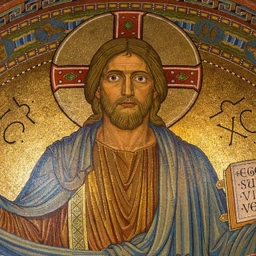
Image: Didgeman, CC0, via Wikimedia Commons
Source: Free RSS feed from catholic-daily-reflections.com — Copyright © 2026 My Catholic Life! Inc. All rights reserved. This content is provided solely for personal, non-commercial use. Redistribution, republication, or commercial use — including use within apps with advertising — is strictly prohibited without written permission.