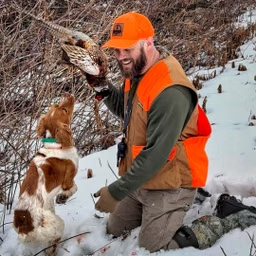
Young bird dogs can make a handler question everything after one rough hunt. Then the next outing offers a very different picture.
Aaron Hepler of InCamp Podcast joins Nick to talk about learning alongside his French Brittany, Rue, and finding a place for bird hunting in a life that already includes bowhunting, work and family. Rue's development leads into a conversation about running pheasants, bird contacts, changing conditions and what it means to look for a pattern instead of judging a dog by a single mistake.
There is more to the story than training. Aaron remembers growing up outdoors in Pennsylvania, shares a few thoughts on taking kids hunting, and looks back on Emma, the Labrador who made bird hunting part of his life. Her loss, and the quiet she left in the house, help explain why getting another bird dog meant so much.
Later, Nick and Aaron compare the expectations they put on themselves with their first pointing dogs. They talk about everyday whoa foundations, learning from older dogs, and the satisfaction of watching a young dog begin to understand the job.
In this episode- Giving kids room to enjoy their own day in the woodsHow Emma's pheasant hunts hooked Aaron on bird dogsMoving from a flushing Labrador to a pointing French BrittanyReading a young dog's progress across multiple bird contactsRue's very different outings in changing wind and moistureEveryday foundations and hunting alongside experienced dogs
InCamp Podcast: https://linktr.ee/incamppodcast
Recorded October 13, 2026. Weather, season references and mentions of an episode releasing "today" refer to that recording date.
Questions from the conversationDoes bumping a bird mean a young pointing dog is falling behind?
A bumped bird alone does not tell the whole story. Nick describes looking at the pattern across contacts: whether the dog is trying to point, what happens on the next bird, and how conditions affect the work. Aaron's experiences with Rue show why one frustrating day can look very different from the next outing. This is a discussion of their experiences, not a training prescription.
How did Aaron's experience change when he moved from a Labrador to a French Brittany?
Aaron found himself learning a different job alongside Rue after years of pheasant hunting with his Labrador, Emma. He describes encouraging a pointing dog's natural instincts and providing bird exposure rather than trying to manufacture a point. The conversation centers on his own dogs and his expectations as a handler. It does not establish a rule about every Labrador or Brittany.
What helped Aaron see progress in Rue's pointing?
Repeated bird contacts gave Aaron a better picture of what Rue understood. He describes solid woodcock points and a pheasant outing that followed a much harder day. Nick connects those stories to looking for a pattern over time. Aaron also reflects on wind, moisture and running birds, while the conversation leaves room for several factors influencing any individual hunt.
What do Nick and Aaron mean by everyday whoa foundations?
They describe brief, consistent moments in daily life where a dog stands and waits for a release, including around meals, doors and the kennel. Nick distinguishes that foundation from the more involved steadiness work a new handler might see demonstrated. Aaron discusses adjusting to the dog in front of him. Their point is the value of clear, repeated communication in their own routines.
What can a young bird dog learn from hunting with an older dog?
Aaron describes Rue backing an experienced Vizsla and paying attention to how that dog worked. Nick shares his early observations of running a puppy with an older setter, while also wanting the pup to develop an independent search. Both stories concern what they have seen with their own dogs. The balance between shared hunts and solo time remains part of that development.
How do they approach taking kids hunting?
Nick and Aaron talk about letting the child's experience shape the day rather than pressing toward the adult's original objective. Aaron describes adjusting to a child's energy and interest, while Nick reflects on slowing down with his boys. Small-game outings and a memorable turkey encounter illustrate the conversation. Current youth-season dates and requirements depend on the relevant state regulations.
Support the showSupport the show on Patreon: https://www.patreon.com/c/birdshot
SponsorsThis episode is brought to you by Upland Gun Company, Final Rise, and Irish Setter Boots.
Upland Gun Company: https://uplandguncompany.com/
Final Rise Shirt of the Month: https://finalrise.com/pages/upland-shirt-subscription
Irish Setter Pheasants Forever Edition: https://irishsetterboots.com/pheasantsforever
Spotify: https://open.spotify.com/show/17EVUDJPwR2iJggzhLYil7
Apple Podcasts: https://podcasts.apple.com/us/podcast/birdshot-podcast/id1288308609
YouTube: https://www.youtube.com/@birdshot.podcast
Instagram: https://www.instagram.com/birdshot.podcast/
Website: https://www.birdshotpodcast.com/
Hosted by Simplecast, an AdsWizz company. See pcm.adswizz.com for information about our collection and use of personal data for advertising.