19 October 2026
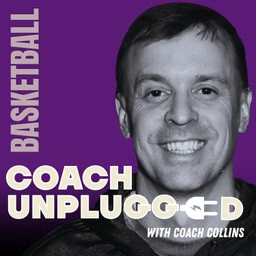
Ep 2047 Are You Calling Timeouts or Just Stopping the Clock?
Basketball Coach Unplugged (A Basketball Coaching Podcast)
About
https://teachhoops.com/
When to burn one, what to say in thirty seconds, and why most timeouts send players back out knowing less than when they sat down.
Coach Steve Collins has a confession. For his first five years as a head coach, he called timeouts mostly for himself. He was frustrated, the gym was loud, and he needed it to stop. One night, down six in the third quarter, he talked fast and loud for a full minute about everything, and his point guard walked back onto the floor and asked, "Coach, what are we running?"
That was not a timeout. That was stopping the clock. In this deep dive, Steve breaks down how to decide when a timeout is worth spending, how to use the first ten seconds with your staff, what to actually say in the thirty seconds you have, and how to practice the timeout itself so it becomes calm, routine, and useful by opening night.
Part 1: Why and Who
The minute long timeout that left the most important player on the floor knowing nothing
The four jobs of a timeout: stop a run, fix one thing, set up a play, give tired legs a breath
Why timeouts are money, and the late game possession Steve watched helplessly after spending them early
Budgeting timeouts: one or two in the first half, and always two saved for the last three minutes
Giving your team one possession to answer a run before you stop it
Using the first ten seconds for a quick staff huddle, then speaking with one voice
Part 2: What Gets Said
The thirty second script: what is happening, what we do about it, and who does it
The clipboard trap, and why a timeout is the place to call a play you own, not teach a new one
Managing emotion before information, because upset players cannot hear X's and O's
The senior who needed a hand on his shoulder before he could hear the next assignment
Practicing real timeouts in the middle of a Tuesday scrimmage until they become routine
Rehearsing the late game timeout with the clock running, so February is not the first time
Keeping a postgame timeout log to learn how you coach in the hardest moments
Chapters
00:00 Coach Unplugged intro
00:16 Opening hook: calling timeouts for the coach
01:16 Preroll: TeachHoops.com special situations and end of game plans
01:39 The point guard who did not know the play
02:31 Takeaway 1: Know why before you call it
04:35 Takeaway 2: Staff first, then one voice
06:20 Takeaway 3: The thirty second script
07:39 Midroll: TeachHoops.com after timeout plays and community
08:01 Takeaway 4: Emotion first, then information
09:08 Takeaway 5: Practice your timeouts
10:45 The challenge
10:56 Postroll: TeachHoops.com
This week's challenge: Write down your four reasons to call a timeout, and do not call one this season unless you can name the reason.
Format: Deep Dive, two parts.
Resources: After timeout plays, end of game situations, special situations playbooks, practice plans, courses, and on court clinics at https://teachhoops.com/
Recorded at the Fifth Quarter Studios in Madison, Wisconsin.
Learn more about your ad choices. Visit podcastchoices.com/adchoices