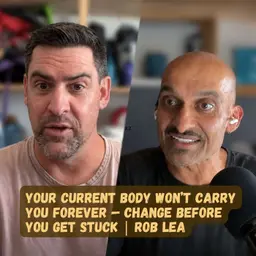
Your Current Body Won’t Carry You Forever — Change Before You Get Stuck | Rob Lea
Ageless Athlete — How to Stay Strong, Curious & Capable for Life
Ageless Athlete Newsletter. Weekly longevity insights + behind-the-scenes. No spam ever. 🚨
At 45, Rob Lea became the first person in history to complete the Double Seven: climbing the highest summit on every continent and swimming the Oceans Seven.
To do it, he had to accept that one version of his body could not carry him through every challenge. The body that climbed Everest was not the body he needed for cold-water swimming. Major ankle surgery changed how he trained. Injuries, failed attempts, recovery, and age kept forcing him to adapt.
And Rob did all of this while working in real estate and fitting training around clients, travel, and everyday life.
In this conversation, we talk about:
- Why your current body and training approach will not work forever How to adapt without giving up ambitious goals The difference between looking fit and being capable Training by feel instead of chasing perfect data The Molokaʻi swim that left Rob with fluid in his lungs What happens when a 17-year goal is finally complete Why staying an athlete may require becoming a different one
Rob is also quick to point out that none of this happened alone. His wife, Caroline Gleich, and his parents supported the journey in countless ways—from giving up vacation time and driving him to airports to watching the dog while he was away.
Rob’s story is extreme, but the lesson is universal: your body will change. The question is whether you change with it before you get stuck.
Follow Rob on Instagram: @rob.lea
🎥 Want the full experience?
YouTube — full-length video. free.
📍More clips + behind-the-scenes
Ageless Athlete on Instagram - follow along.
🚀 Love the show? Here’s how to support it
If something you’ve heard here has stayed with you, made you smile, or helped you keep going, I’d be honored if you’d consider supporting the show. 👉 https://buymeacoffee.com/agelessathlete
Topics: longevity, fitness over 40, endurance training, aging athletes, recovery, injury prevention