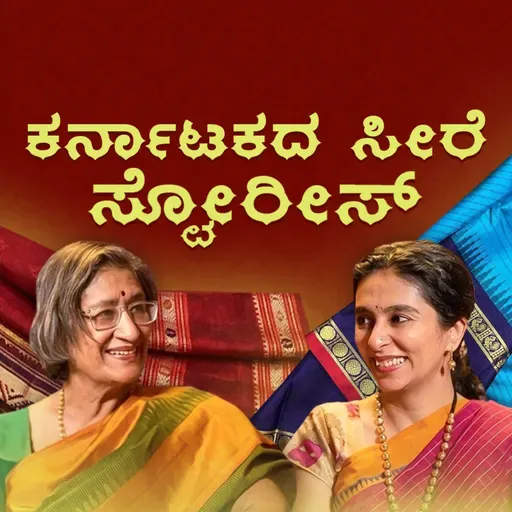
ಕರ್ನಾಟಕದ ಸೀರೆ ಸ್ಟೋರೀಸ್ | Karnataka's Sari Stories
100/100 Karnataka | ನೂರಕ್ಕೆ ನೂರು ಕರ್ನಾಟಕ || Radio Azim Premji University
What does a sari carry?
In this episode of Noorakke Nooru Karnataka, we sit down with Pavithra Muddaya to explore the many lives of the sari in Karnataka—not just as fabric, but as memory, labor, identity, and inheritance. From the legacy of Vimor, started in 1974 with her mother Chimy Nanjappa, to working closely with weavers across the state, Pavithra traces how each sari carries a geography within it.
This journey also lives on through the Vimor Museum of Living Textiles, where these histories are preserved as living traditions. In Molakalmuru, she speaks about introducing a dotted line within the weave — a small but significant intervention that made the process easier for weavers, opening up livelihoods.
These saris came to be known as Pooje saris, because they were often sourced from temple auctions, carrying with them a ritual life before entering everyday use. At the heart of this weave is ikkat — a tie-and-dye technique, challenging the belief that ikkat did not exist in Karnataka.
From the Adike Gini motif that defines Molakalmuru, the conversation moves to a question we rarely as—did Bengaluru once have its own sari? Through stories of weaving societies, contrast borders, and a 72-year-old weaver still working on the city’s outskirts, a forgotten textile history begins to emerge.
Along the way, the episode also touches upon meenakari work and how aesthetics evolve across regions and time. This is not just about textiles. It is about how a sari moves through a woman’s life—from ritual to routine, from inheritance to innovation.
#KarnatakaSaris #TextileStories #IndianWeaves #HandloomIndia #Molakalmuru #Vimor #CultureOfKarnataka #SariStories